


I feel the need, the need for speed.” That iconic line from the movie “Top Gun” summarizes the state of bedding machinery. And while creating faster machinery is essential in a competitive marketplace, suppliers are also innovating ways to reduce labor and be more accurate and sustainable.
Innovating for Less Packaging
Reducing packaging volume has been a key focus for machinery suppliers in recent years. Less packaging allows more units per shipping container, leading to lower emissions and decreased shipping costs.
“Let’s say — in the last 10 years — we know how to smash the product and get it to be as small as possible,” says Mark DeCoteau, director of U.S. operations for Verona, Italy-based Dolphinpack. “So, I don’t think that’s where things are going to go. It’s more about how we service the customers. How do we reduce their waste or reduce their cost in the amount of plastic they use? And also the amount of labor they use.”
Tackling Labor Challenges with Innovative Machinery
One of the biggest priorities in machinery today is labor reduction — particularly end-to-end automation that eliminates manual labor in traditionally overlooked areas.
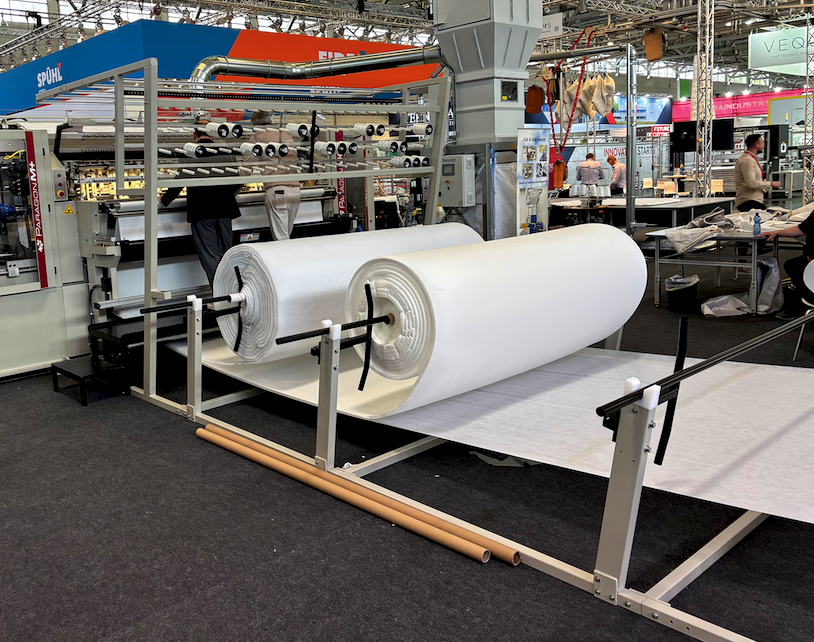
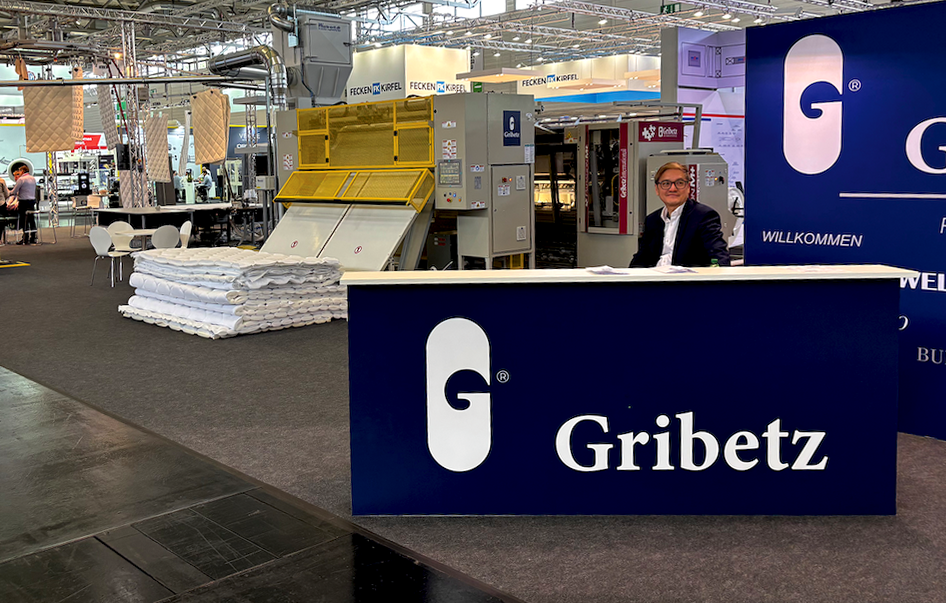
Paul Block, president of sales at Gribetz, says this is a focus for the Sunrise, Florida-based company (formed after the purchase of Global Systems Group by ABM International earlier this year). “The mattress industry has been facing many challenges since Covid,” Block says. “We believe the single biggest challenge our customers face is centered on the availability of skilled labor, and it will require a new age of production machinery that can increase efficiency, reduce waste and simplify assembly.”
Mitch Nussbaum, marketing specialist at C3, a machinery supplier in Appleton, Wisconsin, echoes Block’s sentiments. “Labor remains a key pressure point for our customers, and it’s not going away. Over the next three to five years, we see machinery continuing to evolve through targeted automation — strategically placed systems that reduce reliance on manual labor without overcomplicating operations. Smart machinery will become more user-friendly, more connected and more scalable — supporting manufacturers who need flexibility without sacrificing performance.”
End-to-End Automation and Smart Machinery
Labor reduction goes hand in hand with automation. “With rising costs, tighter margins and fierce competition, manufacturers are looking to minimize waste, increase in-house capabilities and streamline operations,” says Dhruvin Patel, global sales manager at Bursa, Turkey-based Elektroteks.
C3’s End-of-Line Automation System, introduced in January, handles everything from case erection through palletizing. It provides manufacturers with a fully integrated end-of-line workflow that improves throughput and reduces manual handling. Its upcoming High Scale Automation for Hybrid Bed Construction, launching in September, is designed to handle complex assemblies like hybrid mattresses.
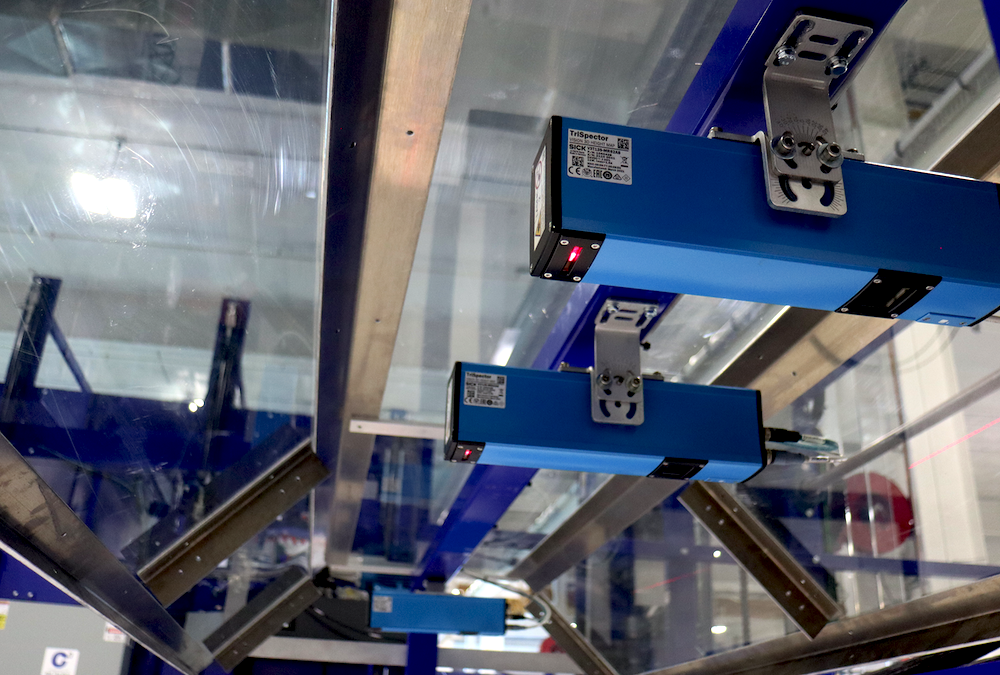
camera-based system to align adhesive paths.
Atlanta Attachment Co.’s most recent innovation isn’t a piece of equipment but controls. With its Gateway 2.0 launch, it integrated its proprietary serial bus control system with an industrial PC, allowing it to leverage the benefits of connectivity and peripherals of the PC ecosystem. Users can remotely (via server or the cloud) upload and download production schedules, unique recipes and parameters for beds, view production data, receive maintenance feedback from data and push settings out from a central location.
“Since you are connected to an industrial PC, you enable rapid integration of peripherals like barcode scanners, RFID scanners and printers,” says John Chamlee, vice president of business development at the Lawrenceville, Georgia-based supplier. “The power of the PC connection allows easy future integration of AI. We are allowing customers to quickly and cheaply update their 20-year-old machines to leverage this kind of connectivity. Since the system uses our serial bus control system as the machine I/O (input/output) backbone, we can do this without the need to throw out existing controls and wiring.”
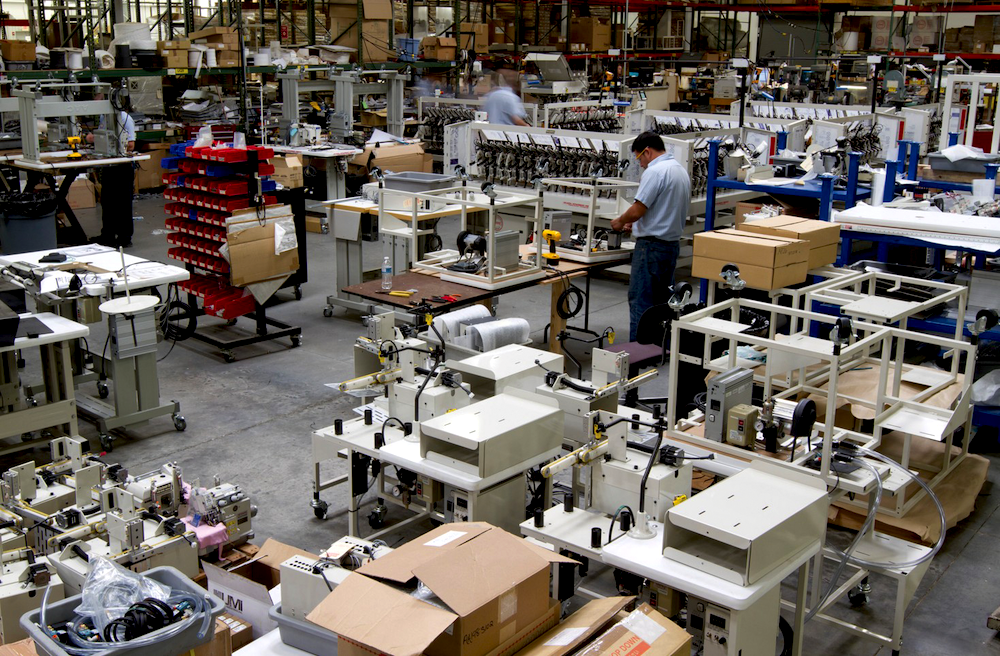
According to Block, ABM’s core strengths are also in software development and servo controls. “Our mission is to design, build and manufacture a full line of highly automated, most cost effective mattress producing equipment in the industry,” Block says. “Many of these innovative machines were game changers for the world of mattress production and became staples of every mattress factory. These included various models of quilting machines, flanging machines, binding machines, label and repair machines, conveyor and material handling equipment, and many others.”
At Dolphinpack, the company has been upgrading its machines, including being able to seal plastic at a thinner gauge, thus reducing the plastic necessary to compress, fold and roll a mattress up to 65%, and automation tools like quality control, which uses cameras and artificial intelligence. “It helps standardize the process and minimize timing. If you’re running a factory five or six days a week, it becomes a huge advantage,” says Matteo Tagliaferri, global sales manager for Dolphinpack.
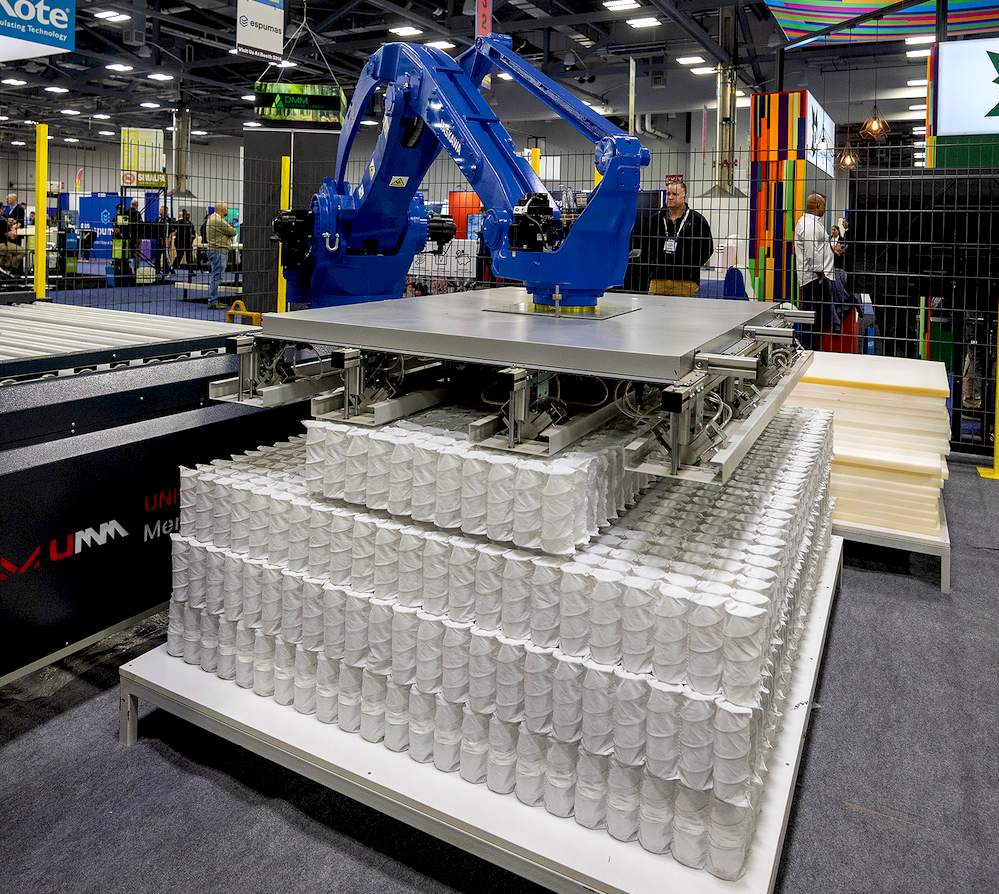
Michael Porter Jr., co-founder of United Mert Makina, headquartered in Delray Beach, Florida, says total automation isn’t realistic. “People have been trying to fully automate and reduce all human participation in mattress production. Based on the nature of the product, that will never work, especially for high-end mattresses,” he says. “UMM is working to develop machinery that incorporates automation to make mattress producers’ lives easier, but with machines that work long-term in the field.”
The Rise of Vision-Based Technology in Machinery
Vision systems — automated tools that mimic human sight — are becoming central to automation.
Earlier this year at Interzum Cologne in Cologne, Germany, C3 debuted an updated version of its Vision-Based Hot Melt Application, an intelligent gluing system that uses vision to detect each part and apply adhesive precisely, no recipes required. It adapts in real-time to part variation, improving speed, accuracy and reducing changeover time.
“This solution eliminates the need for traditional gluing recipes, using a camera-based system to locate and align adhesive paths based on real-time part geometry,” Nussbaum says. “It solves a common bottleneck in production — slowing down for changeovers or minor part differences. With this technology, manufacturers can continuously run different parts at high speed — up to one part every six seconds — without sacrificing precision or throughput.”
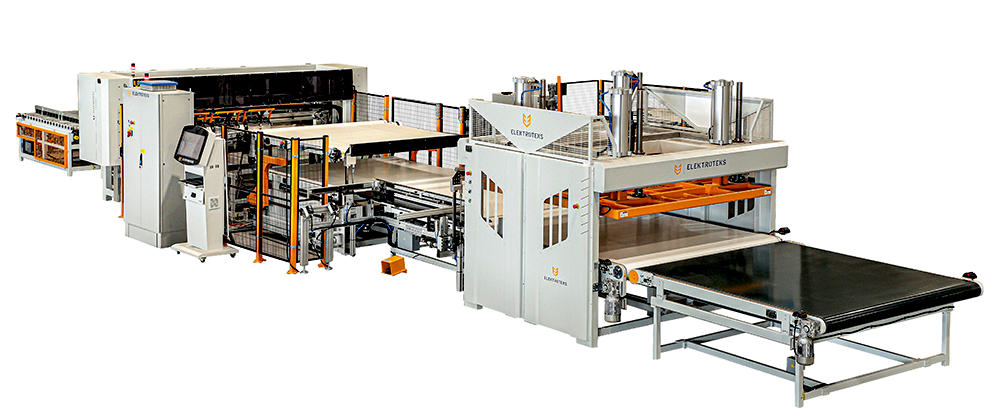
Elektroteks has also automated its production lines with RFID, vision systems and barcode integration. Now, with its FoamET and NEXUS systems, it has been able to apply the same level of automation to its foam handling business, Patel says.
The Next Frontier: AI-Powered Manufacturing
Beyond vision systems, AI is the next step in smart machinery.
“I think that machinery in general will begin to incorporate AI into their DNA and become more and more valuable to the user, especially in its ability to troubleshoot and offer solutions to the user,” AAC’s Chamlee says. “Certainly, AI will continue to push into areas of quality control and secondary processes. Things that are now processed outside of the production line and outside of the ‘machinery’ will become integral without the need of outside processes.”
That’s also true at Elektroteks. “Our goal is continuous innovation — enhancing speed, flexibility and integration based on customer needs and market demands,” Patel says. “With AI at the center, future systems will be smarter, more predictive and even more sustainable. We’re investing heavily in AI. Our upcoming AI Agent will help manage predictive maintenance, service schedules, batch production and more — all aimed at improving efficiency and reducing downtime.”


